
When a critically ill newborn requires specialized care that's miles away, a unique kind of expert steps in: the NICU flight nurse. These are elite registered nurses who have dedicated their careers to providing intensive care to the most fragile patients imaginable—newborns—all while in the air. Their entire mission is to provide a seamless, uninterrupted continuation of Neonatal Intensive Care Unit (NICU) level care, tens of thousands of feet above the ground.
What is a NICU Flight Nurse?
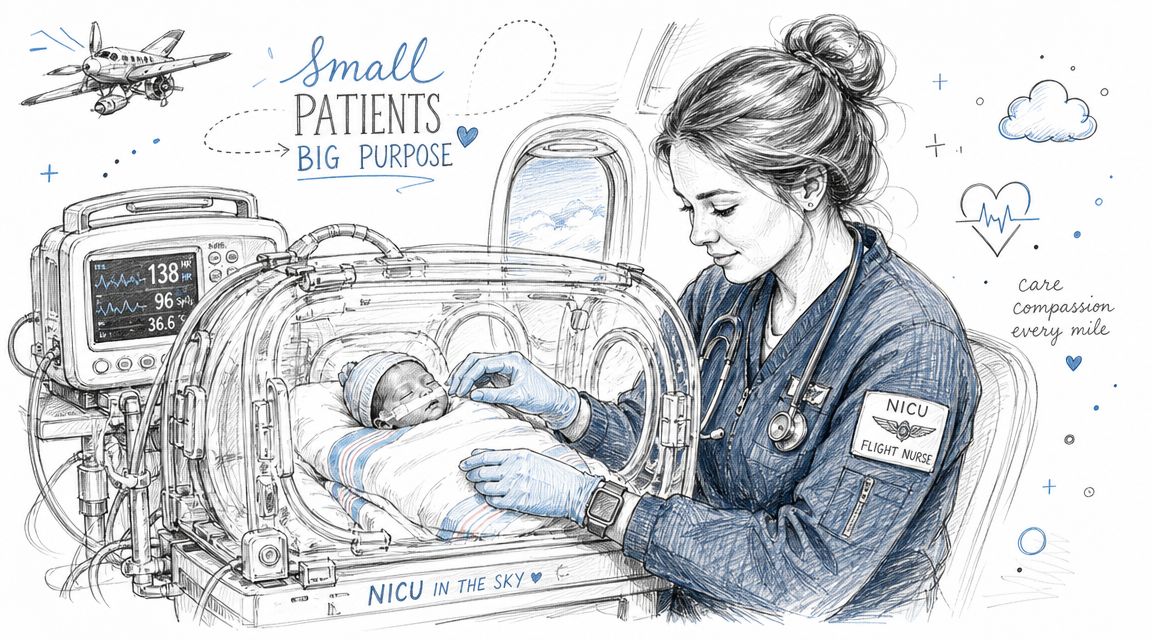
A NICU flight nurse doesn't just work in a plane; they command a mobile, high-stakes environment that is essentially a "NICU in the sky." Think about all the sophisticated equipment, constant monitoring, and delicate procedures of a top-tier hospital's neonatal unit. Now, imagine all of it meticulously organized inside the cabin of a medical jet. This is the world where these nurses operate, blending their deep critical care knowledge with the specific challenges of aviation medicine.
What Do NICU Flight Nurses Do?
At its core, a NICU flight nurse's job is to safely transport critically ill infants from one medical facility to another, usually to give them access to a higher level of care. It’s a job that demands precision, calmness under pressure, and profound expertise.
To give you a clearer picture, here’s a quick overview of their responsibilities from start to finish.
At-a-Glance Duties of a NICU Flight Nurse
| Phase of Transport | Primary Responsibilities |
|---|---|
| Pre-Flight | Review the infant’s chart, consult with the sending physician, and prepare all necessary medications and equipment for the specific patient's needs. |
| At the Sending Hospital | Perform a full head-to-toe assessment, stabilize the infant for transport, and carefully transition them from the hospital's equipment to the portable transport system. |
| In-Flight | Continuously monitor vital signs, manage ventilators and IV infusions, administer medications, and respond to any changes in the baby's condition. |
| At the Receiving Hospital | Provide a detailed handover report to the receiving NICU team and safely transfer the infant to their care. |
This table just scratches the surface of the immense skill involved in every single transport mission.
The tiny patients under their care often have complex medical needs, including:
- Premature infants: Babies born too early who need help with breathing, staying warm, and specialized feeding.
- Newborns with congenital heart defects: Infants born with structural heart issues who require urgent surgery.
- Babies with surgical needs: Those who need complex procedures not available at their current hospital.
- Infants with respiratory distress: Babies who are struggling to breathe on their own and require advanced ventilation.
The primary goal is simple in concept but profound in practice: move the infant safely while maintaining their stability from one hospital bedside to the next. This role requires an incredible amount of autonomy. As one parent recalled, the flight nurse "arrived on the helicopter and immediately took command of the room," instilling confidence that their baby was in the very best hands.
This highly specialized role is a vital part of the broader medical transport world, which also includes caring for older children. While there are overlaps, the needs of a newborn are unique, as you can see when you compare this role to that of a pediatric flight nurse. Ultimately, the unwavering commitment of a NICU flight nurse ensures that distance is never a barrier to life-saving care.
How Do You Become a NICU Flight Nurse?
Becoming a NICU flight nurse isn’t a career you can just step into after nursing school. Think of it as a pinnacle achievement, one built on years of dedicated, high-stakes neonatal care. While all nurses start with foundational education, the journey to caring for a fragile infant at 30,000 feet demands a whole different level of expertise. Aspiring nurses can look into various adult pathways to nursing careers to get a feel for those first steps toward becoming a registered nurse (RN).
But an RN license is just the ticket to entry. The real prerequisite is extensive, hands-on experience in a top-tier Neonatal Intensive Care Unit. Most air medical services won't even look at a resume without a minimum of three to five years of recent work in a Level III or IV NICU. These are the units where nurses are on the front lines, managing the most complex and critically unstable infants every single day.
That kind of bedside experience is where a nurse truly hones the instinct and clinical judgment needed for the autonomous world of a medical flight. In a hospital, you have a team of specialists a call button away. In the cabin of an aircraft, the flight nurse is the expert. There's no one else to turn to.
What Certifications Do You Need to Be a NICU Flight Nurse?
On top of those years of experience, a NICU flight nurse’s resume must be stacked with advanced certifications that prove their mettle in a crisis. These aren't just "nice to have"—they're the absolute standard for this line of work.
Key certifications you'll always see include:
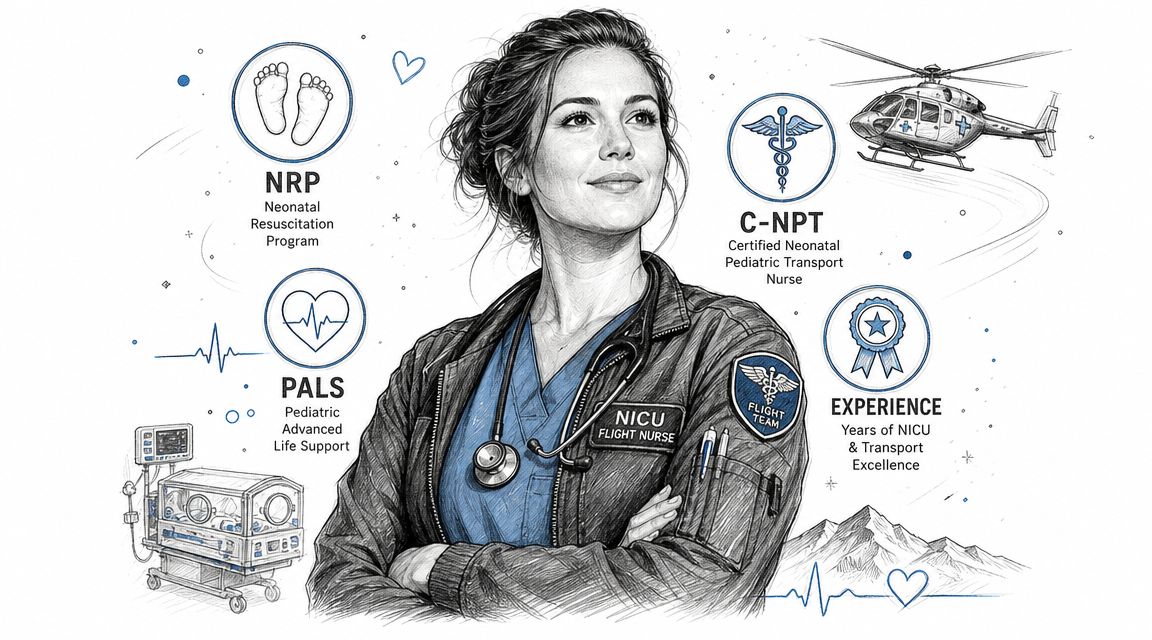
- Neonatal Resuscitation Program (NRP): This is non-negotiable. It focuses entirely on resuscitating newborns, a skill that's absolutely vital when a baby's condition can turn on a dime.
- Pediatric Advanced Life Support (PALS): While broader than just neonates, PALS equips nurses with the critical thinking needed to manage life-threatening emergencies in any young patient, making it a perfect complement to NRP.
- Transport-Specific Credentials: Certifications like the Certified Neonatal Pediatric Transport (C-NPT) are the gold standard. They signal a deep, specialized knowledge of transport physiology and the unique challenges that come with moving critically ill babies.
"I basically carry an ICU (intensive care unit) on my back that’s strictly pediatric and neonatal. So, you can go to a very, very, very small town where a newborn was born prematurely, and it’s not that they aren’t capable, they just don’t have the pediatric experience and the equipment."
This powerful combination of real-world experience and advanced credentials ensures the nurse on board is a top-tier specialist. The job market reflects this; while the Bureau of Labor Statistics doesn't track this role separately, hiring practices consistently show a demand for RNs with at least three years of high-level NICU experience and a collection of advanced certifications. This rigorous preparation is exactly what provides peace of mind to families and referring hospitals.
What Equipment is on a Neonatal Medical Flight?
Stepping onto a medical jet set up for a neonatal transport can feel like entering a whole new world. It's a compact, high-tech intensive care unit that just happens to fly. This isn't simply a plane with a nurse on board; it's a fully-equipped mobile NICU where every single inch has been engineered to support the most fragile of patients. For families and case managers, understanding this environment can go a long way in turning anxiety into confidence.
At the very heart of this flying ICU is the transport isolette. Think of it as a clear, self-contained pod that creates a protective bubble for the infant. But it's so much more than a carrier. It's a micro-environment meticulously managed by the NICU flight nurse, who controls every aspect of the baby's immediate surroundings.
The isolette acts as a shield against the unique challenges of flight. It maintains a precise temperature to prevent dangerous heat loss, controls humidity to protect delicate skin, and delivers a consistent, specified concentration of oxygen.
This incredible level of control is what keeps an infant stable and secure, even as the aircraft climbs to 30,000 feet.
The Tools of Airborne Intensive Care
To make this all happen, a NICU flight nurse works with an array of specialized equipment built for portability and absolute reliability under pressure. A common question we get from parents is whether the care in the air will be the same as in the hospital. The answer is a resounding yes, and it’s all thanks to this gear.
We essentially recreate the NICU environment in the cabin using advanced, portable versions of hospital equipment. The table below outlines some of the essential tools we use on every neonatal flight.
Essential NICU Flight Equipment
| Equipment | Purpose in Neonatal Transport |
|---|---|
| Transport Ventilator | A compact, powerful breathing machine providing the same advanced respiratory support as a hospital NICU. |
| Multi-Parameter Monitor | Gives a constant, real-time view of heart rate, oxygen saturation, blood pressure, and breathing. |
| Infusion Pumps | Delivers precise, continuous doses of life-sustaining medications and IV nutrition, all secured for flight. |
| Transport Isolette | A self-contained "mobile womb" that controls temperature, humidity, and oxygen for ultimate stability. |
The NICU flight nurse isn't just a passive observer of this technology; they are actively managing it every second of the flight. They adjust settings on the ventilator, respond to monitor alarms, and make critical decisions based on the data, ensuring the baby receives uninterrupted, high-level care from one bedside to the next.
Everything on the aircraft, from the isolette itself down to the smallest IV line, is chosen specifically for its performance and safety in the flight environment. To get a better sense of the specialized inventory required for these critical missions, you can learn more about the types of aero-medical supplies we use. This commitment proves that the aircraft isn't a compromise in care—it's a seamless continuation of it.
How Does a Neonatal Air Ambulance Transfer Work?
When a newborn requires a higher level of care, every single moment counts. For families, the thought of moving a fragile infant from one hospital to another can be incredibly overwhelming. At Med Jets by Air Trek, our entire process is built to lift that weight from your shoulders, offering a complete bedside-to-bedside transfer managed by a team of dedicated experts. It all begins with one phone call.
The moment a family or hospital case manager reaches out, our flight coordinators get to work. They become the central point of contact, gathering the essential details about the baby's condition, the current hospital, the destination facility, and any unique medical requirements. This first step is absolutely critical because it lays the groundwork for a safe and perfectly executed transport.
From First Call to Flight Crew Activation
Once we have the initial details, the mission is officially set in motion. This means more than just dispatching a plane; it's about activating a specialized medical team. Our NICU flight nurse and their crew immediately review the infant's chart, consult with the physicians, and begin preparing the precise medications and equipment needed for the flight.
At the same time, our pilots and dispatch team are charting the quickest, safest flight path and handling all the aviation logistics. This parallel planning—where medical and flight preparations happen simultaneously—is key. It cuts down on delays and gets our team in the air and on their way as fast as humanly possible. This infographic shows how these coordinated steps come together for every neonatal transport.
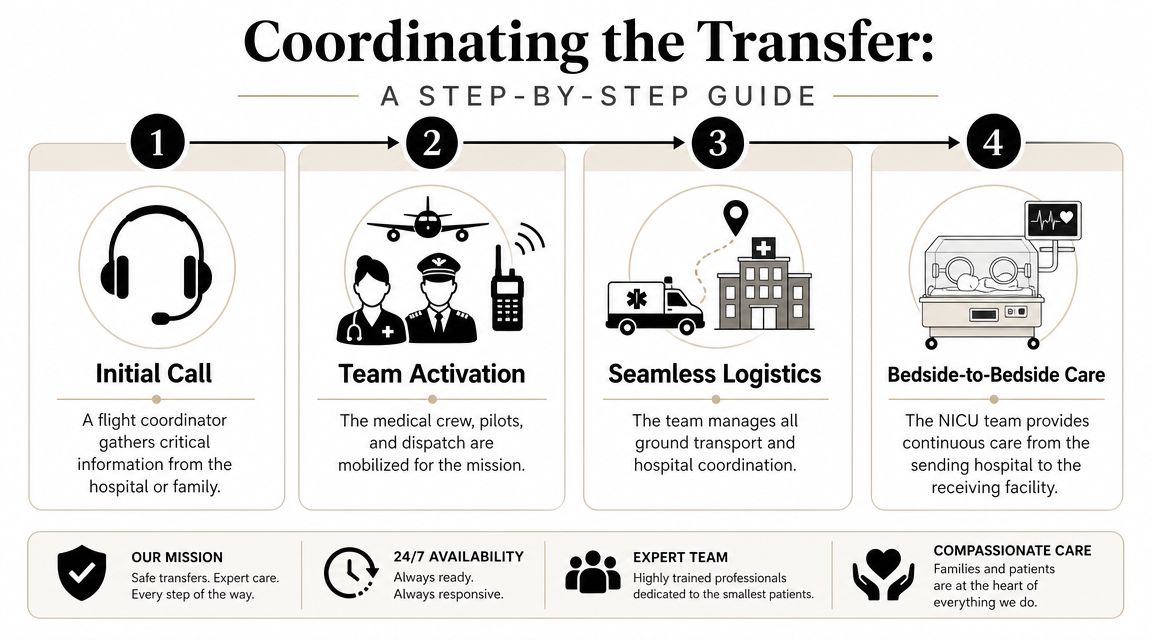
As you can see, every stage, from the initial contact to the final handoff at the new facility, is part of one integrated system designed for continuous, uninterrupted care.
Handling Every Detail for Peace of Mind
So, what does "bedside-to-bedside" care actually look like? It means we take care of literally everything. Med Jets by Air Trek arranges for specialized ground ambulances to be waiting at both the departure and arrival airports. Our team communicates directly with the medical staff at both hospitals to ensure a professional and seamless handoff.
We believe families should be able to focus on their child, not on coordinating travel plans. That's why we also ensure at least one parent can fly with their infant whenever possible, providing that crucial emotional support during such a stressful journey.
Throughout the entire transfer, we keep families in the loop with constant updates. Our commitment is to manage every single detail with both precision and compassion. From the minute our NICU flight nurse arrives at the hospital bedside to the safe arrival at the new facility, Med Jets by Air Trek is your partner, ensuring your child receives the highest level of care every step of the way.
Learning that your infant needs a medical flight is an incredibly stressful and emotional moment. When you're feeling overwhelmed, having a clear idea of what comes next can make all the difference. The NICU flight team understands this completely. Their first job is to bring a sense of calm and control to the situation, starting by ensuring your baby is perfectly stable for the journey ahead.
Before the flight ever takes off, the team works methodically to transition your baby from their hospital setup to a specialized transport isolette. They double-check that every vital sign is steady and that all the support systems—from ventilators to IV lines—are working exactly as they should. This careful, pre-flight stabilization is non-negotiable; it’s the foundation for a safe and smooth transfer.
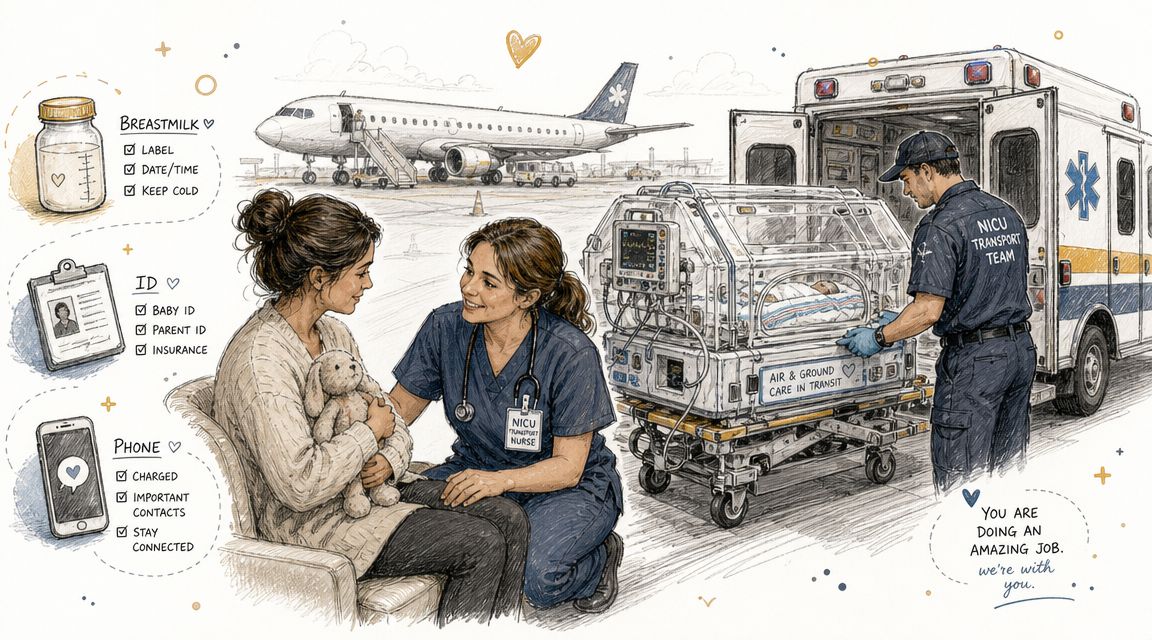
What Can We Bring for the Baby?
It's a common and very natural question. While the aircraft has limited space and medical equipment always comes first, the team encourages bringing a few essential items.
- Breastmilk: If you are pumping, please provide a supply. The transport team is equipped to store it properly, ensuring your baby’s feeding schedule isn’t interrupted during the trip.
- Comfort Items: A small, soft personal item can make a big difference. Think of something like a single crocheted heart or a small swaddle that smells like you. It's always a good idea to confirm with the team what you plan to bring.
"If a parent is improperly dressed for the elements, like no shoes, because they just ran out of the house, I don’t want to bring them on a flight with a very slim possibility of landing in a field… You have to know what you can and can’t deal with."
This quote from an experienced flight nurse really drives home how seriously the team takes overall safety. They have to think about every single possibility, which includes making sure any accompanying family member is also safe and prepared.
What Questions Should I Ask the Air Ambulance Provider?
Never hesitate to ask questions. A good medical transport team wants you to feel informed and confident in their care. Speaking with the air ambulance provider is your opportunity to get the clarity you need.
Here are a few key questions to get you started:
- Can a parent fly with the baby? Most compassionate providers, including Med Jets by Air Trek, strongly recommend having one parent on board. Your presence is a crucial source of comfort for your infant.
- What is the medical crew’s experience? Feel empowered to ask about their specific background. How many years has the NICU flight nurse been doing transports? What are their certifications?
- What happens when we arrive? The crew should be able to walk you through the entire handoff process at the destination, so you know exactly what to expect when you land.
- Who handles the ground transportation? Make sure the provider arranges for specialized ambulances for both pickup and drop-off. This ensures a seamless, true bedside-to-bedside transfer.
Stepping into the role of a NICU flight nurse isn't a starting point in a nursing career—it's a pinnacle. This is a position reserved for highly experienced registered nurses who have already spent years mastering the complexities of neonatal critical care on the ground. Think of it as the special forces of neonatal nursing, a path that requires immense dedication and a true passion for protecting our most fragile patients.
As you might expect, the compensation for a NICU flight nurse reflects this high level of expertise. The salary acknowledges the advanced certifications, the critical independent decision-making, and the sheer weight of responsibility that comes with caring for a critically ill infant thousands of feet in the air.
How Much Does a NICU Flight Nurse Make?
The pay for a NICU flight nurse is almost always higher than that of a hospital-based nurse, simply because the job demands so much more. To give you a baseline, the Bureau of Labor Statistics reported the median annual wage for all registered nurses was $93,600 in May 2024, with a projected job growth of 5% through 2034.
However, flight nurse roles command a significant premium. For example, it's not uncommon to see a job posting for a neonatal transport specialist in a state like Colorado with a pay range of $35.17 to $63.07 per hour. This wide range shows just how much your specific experience and advanced certifications can boost your earning potential.
A career as a NICU flight nurse is not just a job; it’s a commitment to operating at the peak of the nursing profession. The rigorous requirements ensure that only the most competent and experienced clinicians are tasked with this life-saving work.
While the pay is a definite plus, this demanding and rewarding field offers a unique career trajectory for those who are up for the challenge. It’s the perfect convergence for nurses who love both the intensity of neonatal care and the dynamic world of aviation medicine. If you're an experienced nurse who feels that pull, exploring opportunities like flight nurse jobs in Florida can give you a real-world look at what this specialty has to offer.
In the end, this career is about so much more than the salary. It’s about being the person who makes a profound difference when every single second counts.
FAQ About NICU Flight Nurses and Neonatal Transport
Arranging a medical flight for your newborn is a deeply stressful experience, and it's completely normal to have a lot of questions. Getting clear, straightforward answers can make all the difference. We’ve put together this FAQ to address the most common concerns we hear from families and case managers about the NICU flight nurse's role and the transport itself.
Common Questions from Families
Can a parent fly with the baby during a NICU transport?
Absolutely. In nearly every case, we encourage one parent or a designated guardian to fly with their baby. Having you there provides a powerful sense of comfort for your little one and, just as importantly, for you.
At Med Jets by Air Trek, we know that keeping families together is vital, so our aircraft are set up to safely accommodate a family member. It’s always a good idea to confirm this when we first coordinate the flight, as the exact space available can sometimes depend on the specific medical equipment your baby needs.
Is flying in a small plane safe for a critically ill infant?
Yes, it is remarkably safe. Our medical aircraft are essentially flying ICUs, pressurized to maintain a stable, sea-level environment inside the cabin. The entire medical team, especially the NICU flight nurse, has extensive training in managing a baby's unique needs while in the air.
The transport isolette itself is a high-tech cocoon, shielding your baby from any changes in pressure, temperature, or vibration. With decades of experience and a flawless safety record, companies like Med Jets by Air Trek operate under strict FAA regulations to ensure every flight is as safe as possible.
Your child's safety is our absolute highest priority. The aircraft is a mobile ICU, stocked with emergency medications, advanced airway equipment, and continuous monitoring devices. Our team is prepared for any contingency.
What happens if there is a medical emergency during the flight?
This is what your NICU flight nurse is trained for. These nurses are experts at handling in-flight emergencies and can start advanced life support protocols on the spot.
They are always in direct communication with a medical director on the ground for physician-led support. Our pilots are also trained to immediately divert to the closest appropriate hospital if a situation calls for it, so definitive care is never far away.
Understanding the Role
How is a NICU flight nurse different from a hospital NICU nurse?
While they share a deep expertise in neonatal care, a NICU flight nurse has specialized training that allows them to operate with more autonomy in a very challenging environment. Think of them as the ultimate problem-solvers.
They are experts in transport physiology—understanding how the stresses of flight affect a tiny, fragile body—and are masters of the specialized equipment used in the air. In a hospital, there's a large team; in the air, the flight nurse often combines the skills of a NICU nurse, a respiratory therapist, and a paramedic all in one. This unique and demanding skill set is what makes them so incredibly effective during transport.